- Why Manufacturing Companies Are Turning to ChatGPT
- How ChatGPT Improves Production Planning and Decision Making
- Using ChatGPT to Optimize Manufacturing Workflows
- ChatGPT in Quality Control and Process Improvement
- Supporting Manufacturing Workforce and Training with ChatGPT
- Limitations of ChatGPT in Manufacturing Environments
- The Future of Manufacturing with ChatGPT
Why Manufacturing Companies Are Turning to ChatGPT
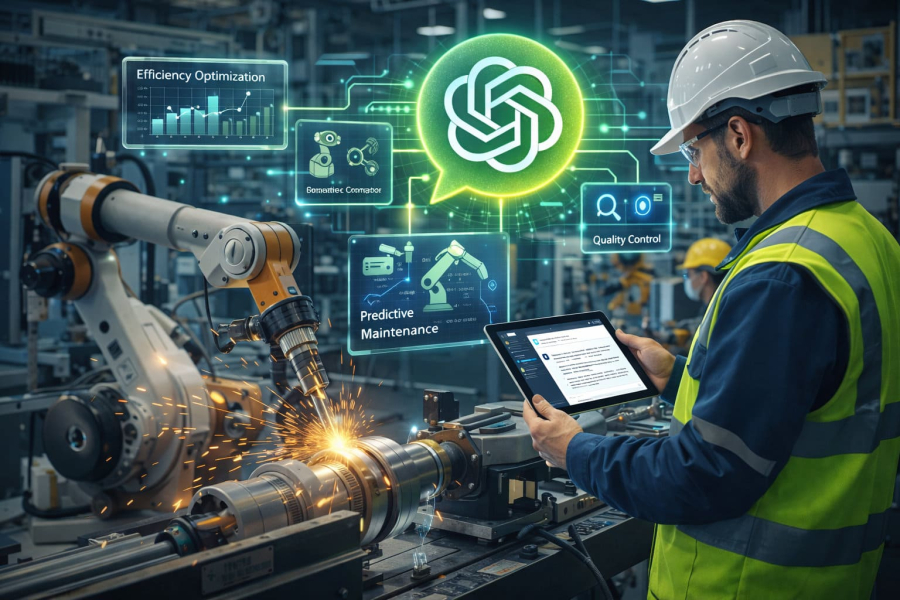
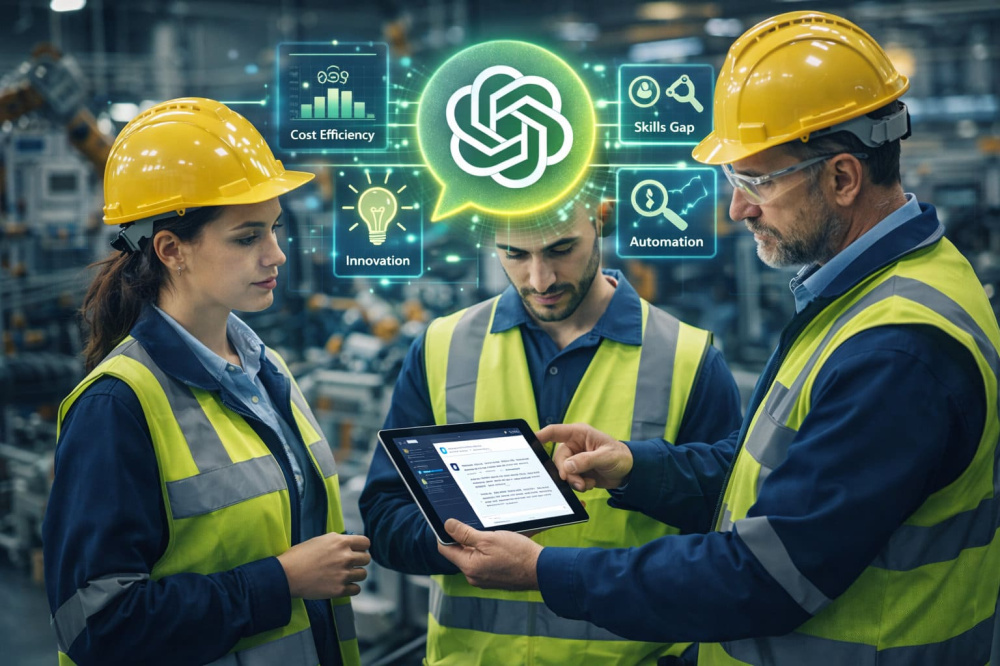
Manufacturing is undergoing a fundamental transformation driven by automation, data, and artificial intelligence. Companies are under constant pressure to reduce costs, improve efficiency, and respond faster to market changes. In this context, ChatGPT is increasingly used as a digital assistant that supports decision-making, communication, and operational optimization across manufacturing environments.
Unlike traditional industrial software, ChatGPT does not require complex interfaces or long onboarding processes. Managers, engineers, and planners can interact with the system using natural language, which lowers adoption barriers. This accessibility makes AI relevant not only for large factories but also for small and mid-sized manufacturing businesses.
For those who want to better understand how ChatGPT is applied in real production workflows, automation planning, and industrial management, a wide range of practical articles and in-depth explanations is available on https://lifeinfohub.de/, where AI use cases are explored from a business and technology perspective.
“Manufacturing efficiency improves when information flows faster than machines.”
From an SEO standpoint, search interest around ChatGPT manufacturing, AI in production, and smart manufacturing continues to grow, reflecting rising demand for practical AI adoption in industry.
How ChatGPT Improves Production Planning and Decision Making
Production planning is one of the most complex aspects of manufacturing, involving schedules, resources, supply chains, and risk management. ChatGPT supports this process by helping teams analyze scenarios, structure information, and evaluate alternatives more efficiently.
By processing large amounts of operational input, ChatGPT assists planners in identifying bottlenecks, prioritizing tasks, and adjusting production plans when conditions change. This is particularly valuable in environments where disruptions are frequent and rapid decisions are required.
ChatGPT also improves cross-department communication. Engineers, procurement teams, and managers can align faster by using AI-generated summaries and explanations that reduce misunderstandings and delays.
Common production planning tasks supported by ChatGPT include:
- Evaluating alternative production scenarios
- Summarizing operational data for management decisions
- Supporting coordination between planning and execution teams
“Good decisions depend on clarity, not just data.”
This role positions ChatGPT as a strategic support tool rather than an automated controller.
Using ChatGPT to Optimize Manufacturing Workflows
Manufacturing workflows often involve repetitive processes that are documented but not always optimized. ChatGPT helps analyze workflows by breaking them down into logical steps and highlighting inefficiencies.
Teams use ChatGPT to review procedures, identify unnecessary complexity, and propose improvements. This is especially useful during continuous improvement initiatives and lean manufacturing projects.
ChatGPT also supports standardization. By helping document best practices in clear language, it reduces dependency on individual knowledge and improves consistency across shifts and locations.
Typical workflow optimization use cases include:
- Reviewing and improving standard operating procedures
- Identifying inefficiencies in material or information flow
- Supporting lean and continuous improvement initiatives
“Optimization starts with understanding how work actually happens.”
These applications align well with modern manufacturing goals focused on flexibility and resilience.
ChatGPT in Quality Control and Process Improvement
Quality control is critical in manufacturing, and even small errors can lead to significant costs. ChatGPT supports quality initiatives by helping teams analyze issues, document findings, and standardize corrective actions.
When defects occur, ChatGPT assists in structuring root cause analysis and organizing lessons learned. This accelerates problem resolution and improves knowledge retention across the organization.
ChatGPT also supports training and quality documentation. Clear explanations of quality standards and inspection procedures help reduce human error and improve compliance.
By improving communication and documentation, ChatGPT indirectly enhances quality outcomes without interfering directly with production systems.
Supporting Manufacturing Workforce and Training with ChatGPT
A skilled workforce is essential for modern manufacturing, yet training remains a challenge due to complexity and staff turnover. ChatGPT helps address this by acting as an on-demand knowledge assistant for employees.
Workers can use ChatGPT to clarify procedures, understand machine behavior, or review safety guidelines without interrupting supervisors. This improves autonomy and reduces training bottlenecks.
ChatGPT also supports onboarding by explaining processes in accessible language. New employees gain confidence faster, which positively impacts productivity and safety.
“Knowledge is most valuable when it is available at the moment of need.”
This use case highlights how AI can strengthen human capabilities rather than replace them.
Limitations of ChatGPT in Manufacturing Environments
Despite its benefits, ChatGPT has limitations that manufacturing companies must consider. It does not have direct access to machines, sensors, or real-time production data unless integrated through additional systems.
ChatGPT should not be used for autonomous control or safety-critical decisions. Its role is advisory and informational, supporting humans rather than replacing established control systems.
Understanding these boundaries is essential for responsible AI adoption in manufacturing. When used correctly, ChatGPT enhances awareness and planning without introducing unnecessary risk.
The Future of Manufacturing with ChatGPT
The future of manufacturing will be shaped by collaboration between humans, machines, and intelligent systems. ChatGPT represents an important step toward more adaptive and knowledge-driven production environments.
As AI integration deepens, conversational tools will likely become standard interfaces for managing complex manufacturing operations. This will improve transparency and responsiveness across the production lifecycle.
For manufacturing-focused blogs and industry leaders, ChatGPT offers a powerful lens through which to explore the evolution of smart factories and digital transformation.
“The future of manufacturing belongs to those who combine technology with understanding.”